Creating OER with the WiNoDa Personas
After writing the subject-specific scripts based on the chosen learning objectives, I began creating the actual online course, i.e. the narrative presentation of the content in Moodle. Our ‘personas’ help […]
𝗖𝘂𝗿𝗶𝗼𝘂𝘀 𝗼𝗳 𝘄𝗵𝗮𝘁 𝘄𝗮𝘀 𝘁𝗮𝘂𝗴𝗵𝘁 𝗮𝘁 𝗼𝘂𝗿 𝗪𝗶𝗻𝘁𝗲𝗿 𝗦𝗰𝗵𝗼𝗼𝗹: 𝗥𝗲𝘀𝗲𝗮𝗿𝗰𝗵 𝘄𝗶𝘁𝗵 𝗡𝗮𝘁𝘂𝗿𝗮𝗹 𝗦𝗰𝗶𝗲𝗻𝗰𝗲 𝗖𝗼𝗹𝗹𝗲𝗰𝘁𝗶𝗼𝗻𝘀? 🖥️ 🐝 We’ll soon release a 𝘀𝗲𝗿𝗶𝗲𝘀 𝗼𝗳 𝗿𝗲𝗰𝗼𝗿𝗱𝗶𝗻𝗴𝘀 from the School, and they will cover a
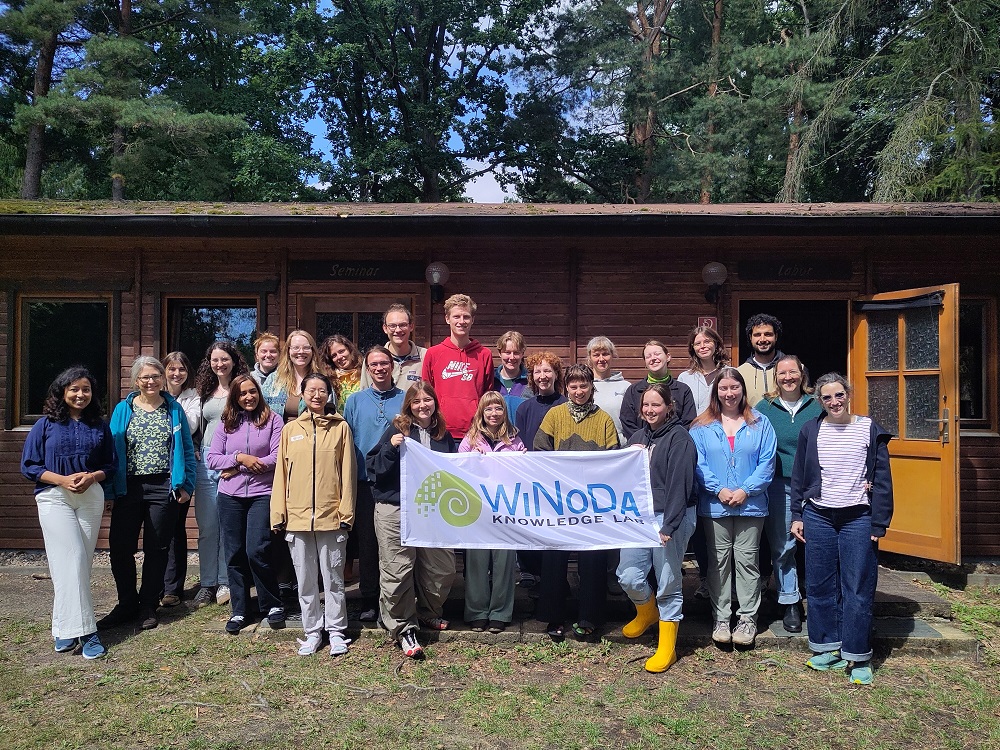
Last week, the WiNoDa team met for its annual project meeting at the MfN in Berlin (thank you for your hospitality!). We are 20 people from 6 institutes – most
How quickly time flies when you’re having fun!There’s a reason for the long silence on our blog – it may have looked like we were hibernating, but we have been
Results of the study “Open science competencies of researchers working with object-related data in Earth and human history” For the Open Science focus area of the WiNoDa project, attitudes, expectations,
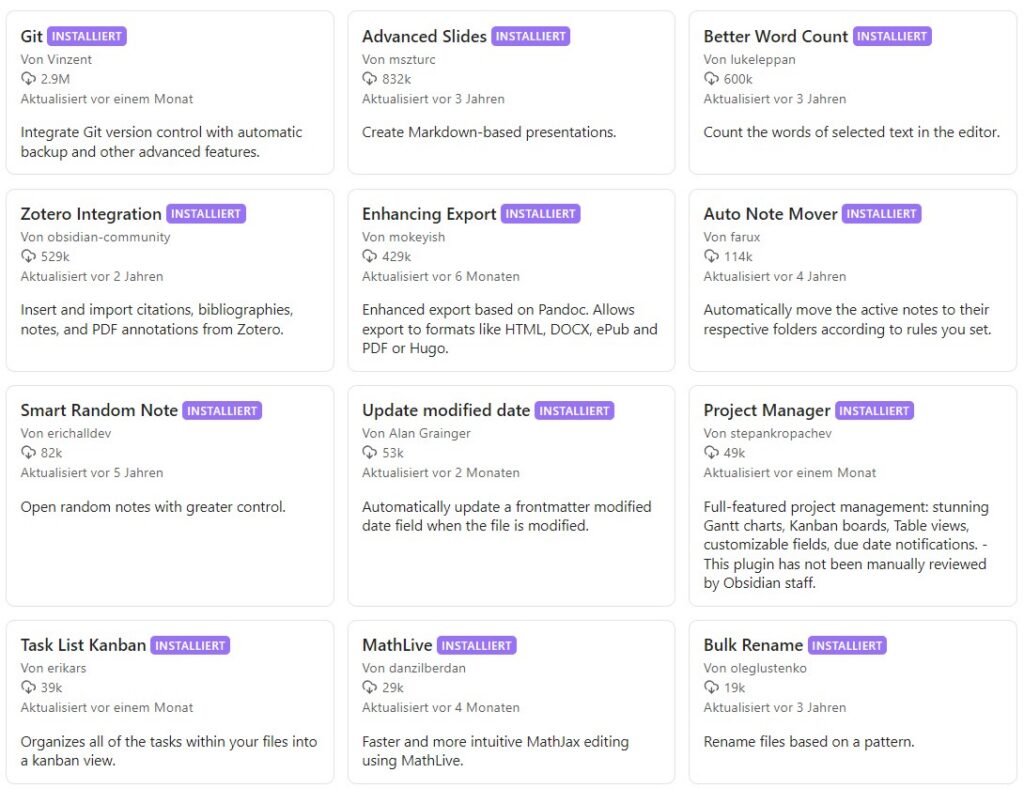
I came across Obsidian on my Mastodon timeline. Some time ago, the subject of “knowledge management” was a hot topic there. The pros and cons of various software programs were
Much has been said and written about the gradual formation of thoughts while writing. And it’s all true!That’s why I’m still glad that I started learning to touch type at
Anyone dealing with Open Science and the FAIR principles will sooner or later encounter persistent identifiers, or PIDs. The first FAIR principle, findability, already refers to them: “(Meta)data are assigned
In the first two parts of this series, I discussed two well-established and widely used sets of principles for contemporary scientific work: FAIR and CARE. I showed how condensing them
On September 30, 2025, 11:00 a.m. CEST, we will have a webinar about data journals at WiNoDa. You can find more information here. Data journals are becoming a more important
In everyday research, a lot of mostly heterogeneous data is generated, which is often processed and analyzed collaboratively. This involves complex workflows and ML pipelines consisting of numerous transformation and
There is a quote by William Gibson, science fiction author, that goes: “The future is already here, it’s just not evenly distributed.”The same is true in the research landscape with
This blog post is part of a series. Part 1 can be found here: https://winoda.de/en/2025/08/13/the-magic-of-acronyms-part-1-fair/ Another acronym that is often mentioned in the same breath as FAIR data is CARE.
Do you recognize this?You read something and then you think something else because of that, and this Something is so banal, so self-evident, so obvious – and then you want
The communication of knowledge requires different forms for different formats – so far, so good. For the Research Data Day, for example, we developed the Data Clues. This was a
June 26, the WiNoDa and DALIA teams hosted a dynamic three‑hour online workshop on “Mapping learning resources and identifying gaps in data competence portfolios.” We brought together participants from data
For the Bremen Research Data Day, our WiNoDa colleagues from gfBio had registered us quite early for the “FAIRplay Station”. Like last year, they wanted to participate with the game
My main task at WiNoda is to create self-study courses on various topics that we want to make available via Moodle.The range of courses on research data management is already
In June 2023, I stumbled into the Research Data Day at the University of Bremen somewhat by chance – at the time, I had just decided that I wanted to
I’m currently writing a social media concept for WiNoDa. You would think this would actually be an easy task: Matching already defined target groups (personas) with possible channels; defining the
Speaking of the digitization of objects, the German Europa stamp 2025 was issued on 8 May 2025.Europa stamps have been issued since 1956 as a symbol of the European community,
In order to compare or analyze poems data sets, they need to be put into a structure. There are various ways to do this: a series of bullet points under
This question can hardly be answered in one sentence.In English, we speak of “data literacy”, i.e. the ability to read and write data.If the alphabet enables us to read and
When someone asks me what I currently do for a living, I answer: I mainly create eLearning materials for a data competence center.At this point, my counterpart’s eyes glaze over
On November 20, 2024, the second event in the “Quo Vadis Open Science in Berlin and Brandenburg 2024/25” series took place, titled “Object-Based Open Access – Open Access for Objects.”
It’s here – the WiNoDa data competence center is now online! The development of the WiNoDa Knowledge Lab involves individuals from various institutions with diverse backgrounds. We asked the project