Self-paced courses

Our Moodle learning platform offers a variety of self-paced courses on working with natural science collections and object-related data. The courses cover key topics such as the handling and reuse of research data, legal and ethical issues in fieldwork, data improvement and enrichment, text recognition, machine learning, and Open Science. For more details, check out the course descriptions. After successfully completing each course, you will receive a certificate. There are badges to be earned along the way, so get started!

If you have any questions or problems with registering for individual courses on Moodle, please feel free to contact us directly via the helpdesk

RDM - Core concepts of data quality in research data management
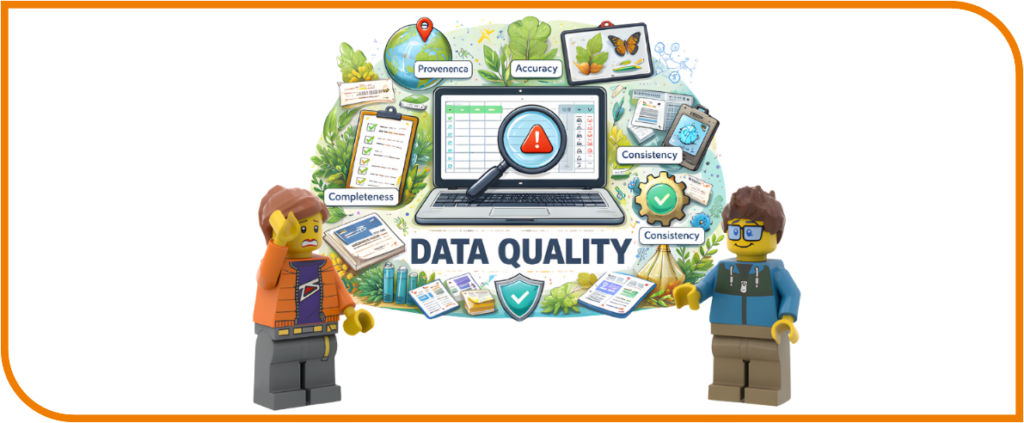
This course introduces the core dimensions of data quality in collection data, including accuracy, completeness, consistency, and provenance, and examines how they shape the reliability, usability, and reuse of data in research and curation. Learners will explore validation and integrity checks that support reproducible research, analyse common data quality problems using practical tools and workflows, and develop the ability to assess whether datasets are fit for purpose and how their quality can be monitored and improved.

>> Register in Moodle and enroll in the course

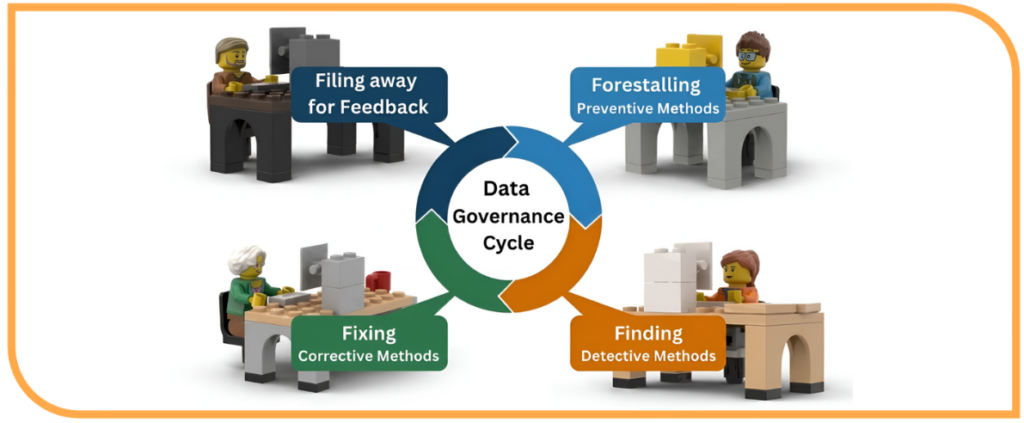
This self-paced online course introduces participants to the benefits of (institutional) data governance concepts for monitoring data quality. The focus is on operational techniques for detecting and preventing issues, e.g. automated checks, manual review with checklists, and rule‑based validation. Participants will learn how to design a lightweight monitoring approach.

Upon completion, participants should be able to understand the roles, tasks and workflows necessary for ensuring continuous improvement of data quality. They should know common tools and methods for monitoring data quality, analyse any detected issues, identify root courses and implement (semi-) automated measures to prevent repeat occurrences.

>> Register in Moodle and enroll in the course

This part introduces the concept of research data reuse and its relevance for object-related research data. It explains how reuse differs from reproduction and replication, why documentation is essential for review, assessment, and later reuse, and how reuse supports quality control, efficiency, cooperation, preservation, and new research contexts.

This part introduces the responsible, legal, ethical, and effective reuse of object-related research data (e.g. biological specimens, genetic material, or collection-based objects) in new research contexts. Participants will learn about key requirements for reuse, including legal permissions, ethical considerations, technical accessibility, documentation quality, content quality, data citation, persistent identifiers, and Open Science practices.

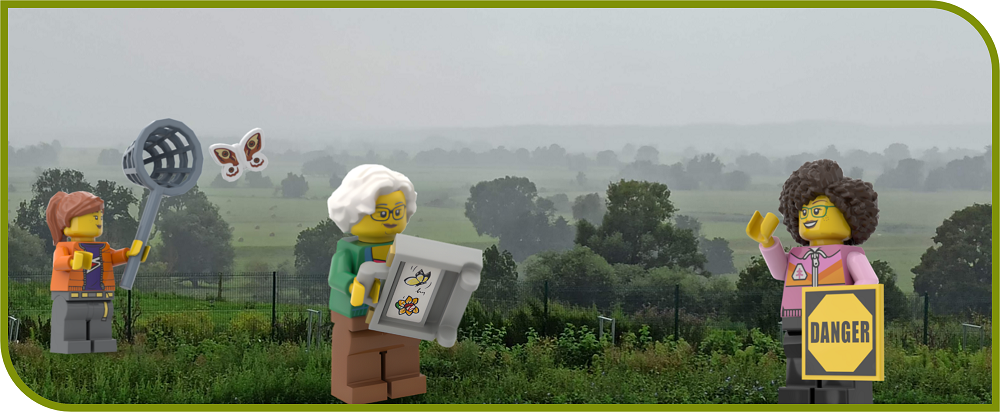
This course provides an overview of the legal, ethical, and institutional frameworks for field research and sampling, including key principles and regulatory instruments such as CARE, FPIC, and the Nagoya Protocol. Through case studies and simulations, participants learn to identify stakeholders, manage authorization and participation processes, and critically evaluate risks and planning in research projects.

>> Register in Moodle and enroll in the course

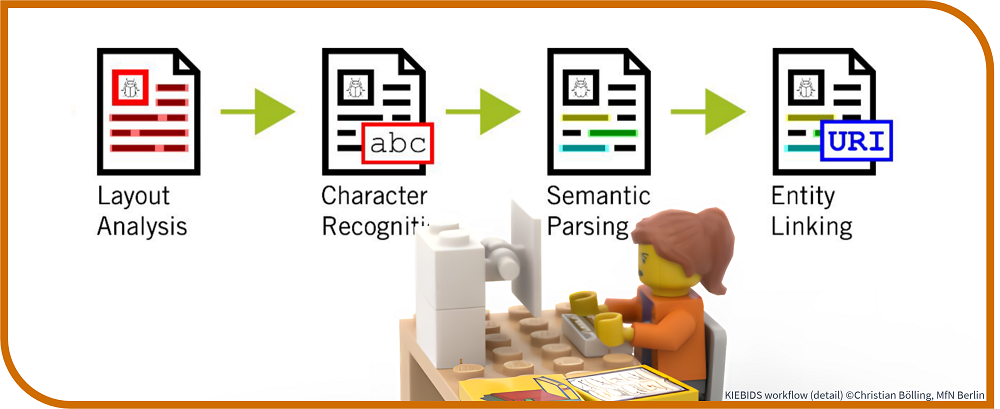
This course explains the basic concepts and workflows of automatic text recognition, including the compilation and preparation of the text corpus, common software and transcription platforms, and best practices for fine-tuning existing text models to your own corpus.

Upon completion of the whole course series, participants should be able to assess the benefits and costs of ATR for their own research projects and to try out common platforms (e.g., eScriptorium, OCR4All, Transkribus) for themselves.

>> Register in Moodle and enroll in the course

This course offers an in-depth introduction to all worflow steps that are necessary to prepare a text corpus for transcription. You’ll learn about common import formats for text corpora, the relevance of preprocessing, quality criteria for import files as well as common software solutions and strategies for optimising import files (noise reduction, grey scale, binarisation, etc.)Upon completion of the whole course series, participants should be able to assess the benefits and costs of ATR for their own research projects and to try out common platforms (e.g., eScriptorium, OCR4All, Transkribus) for themselves.

>> Register in Moodle and enroll in the course

This course offers an in-depth introduction to all worflow steps relevant to the actual transcription of your text corpus, such as the establishment of consistent and well-documented transcription rules, layout and line segmentation, as well as an introduction to the relevance and benefits of structural and textual annotations, NLP, and NER.

>> Register in Moodle and enroll in the course

This course offers an in-depth introduction to the iterative processes of model training: the finetuning of a “Ground Truth” for your own text corpus based on existing text models, the verification and evaluation of results with validation and test data, and the creation of a model replication package.

Upon completion of the whole course series, participants should be able to assess the benefits and costs of ATR for their own research projects and to try out common platforms (e.g., eScriptorium, OCR4All, Transkribus) for themselves.

>> Register in Moodle and enroll in the course

This course introduces methods for harmonizing, validating, enriching, and contextualizing object and find data. Through practical examples, participants learn how semantic enrichment with standards and taxonomies transforms heterogeneous raw data into structured and linked research data.

[coming soon]

This course introduces the principles of Open Science and how it promotes scientific and societal progress, focusing on integrating Open Science into research with object-related natural history data. Participants learn how to publish according to Open Science principles and reflect on practical, policy, and cultural challenges in its implementation.

[coming soon]

Scroll to Top