
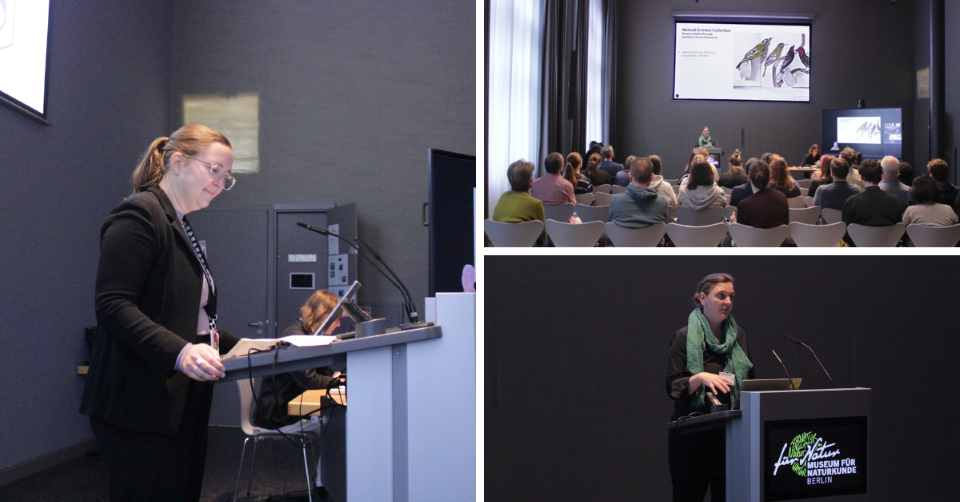
With participants in the conference room of the Museum für Naturkunde Berlin and numerous people joining online, at 9:30 in the morning of October 21, 2026, we declared the conference “Beyond drawers and spreadsheets: the journey of object-related data” officially open.
We kicked off the conference with an introduction from our coordinator, Cora Albrecht, who warmly welcomed participants and then briefly introduced WiNoDa and some of its milestones from the last two years.
Then Mareike Petersen, head of the Science Programme “Collection Future” at MfN, nicely framed the day’s topic, highlighting how much data can be extracted from collections of natural objects while also noting some of the most common challenges in working with historical information. WiNoDa’s learning offers aim to lower the access barrier to this data, making it useful for researchers and museum staff around the world.
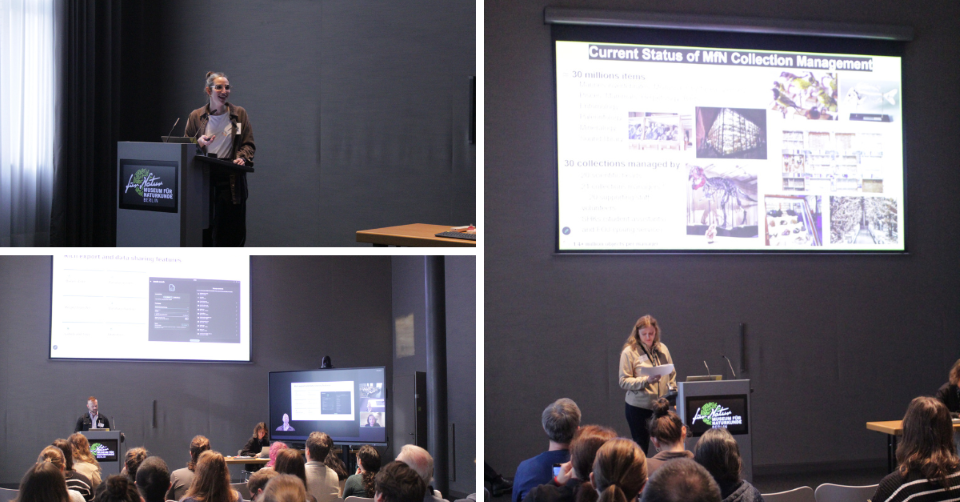
After the introductory talk, it was time for our community. We received numerous excellent submissions for the conference from the following subject areas:
- Collection management and standardisation
- Data reuse for research and conservation
- Digitisation workflows
- AI and computational methods
- FAIR infrastructure, ethics and community
The presenters had five minutes to introduce their project to the audience and our project lead, Alex Miklashevsky, moderated and collected questions at the end of each block. Each presenter also prepared a poster so they could later dive deeper into the topics with interested participants. The idea behind these short presentations was to highlight as many projects as possible and to spark curiosity to open discussion on many of the topics WiNoDa focuses.
The presentations widely varied in topic and application field. The challenges of herbaria digitisation were a popular topic, with examples brought from Chile, Poland and Germany. Computational methods for data acquisition and management were also relevant, with several inputs from MfN colleagues. Several participants had a background in archaeology, which helped us identify common difficulties and solutions across disciplines.
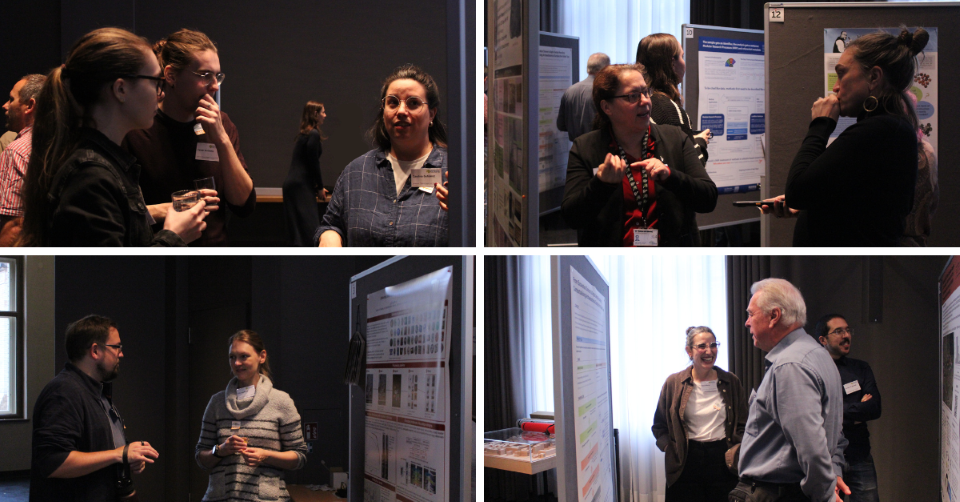
After the lunch break, we started with the poster session. To allow everyone to participate, we created a digital board with all 24 posters, where online participants could leave comments, questions, or contact requests. Meanwhile, the conference room buzzed with energy as everyone dove into discussions in front of the posters. We were pleasantly surprised by the participants’ desire to interact and connect.
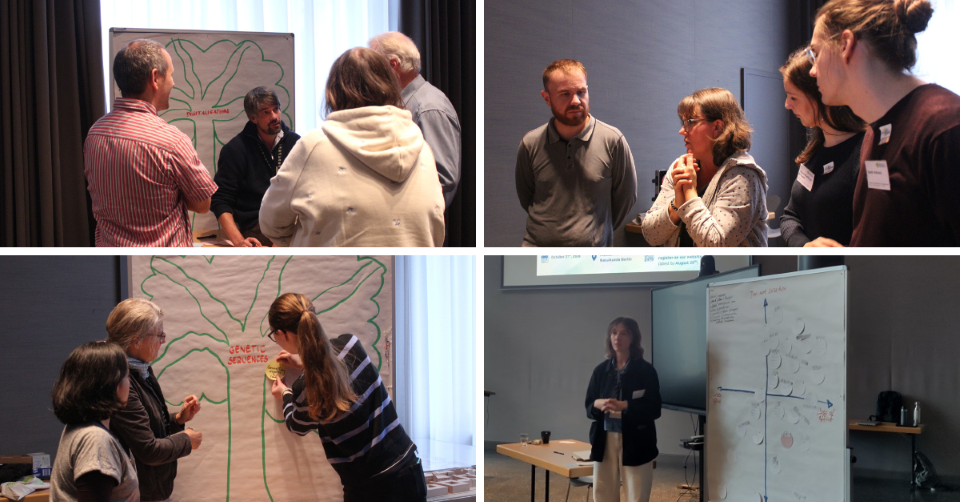
As the final session of the day, our community manager Ginevra Bellini introduced a semi-structured workshop where the participants discussed in groups which competencies are more or less important for topics such as AI & data tools, genetic sequences, digitisation, and management of field samples and their data. In parallel, our public engagement specialist, Katja Loginova, collected feedback on challenges in integrating public engagement into grant preparation as part of her effort to develop guidelines for researchers who want to integrate outreach into their projects. In all groups, ideas flowed throughout the two hours we allocated for the workshop, and at the end, each group briefly summarised what they discussed and the major pain points in each topic.
Through the positive feedback we received and the participants’ enthusiasm, we realised how important the work that WiNoDa carries out is, which gave us a great deal of motivation for the project’s next steps.

Community manager of the WiNoDa Knowledge Lab.
Doctor in plant ecology, passionate about science communication and creative crafts.