
After writing the subject-specific scripts based on the chosen learning objectives, I began creating the actual online course, i.e. the narrative presentation of the content in Moodle. Our ‘personas’ help me with this: curator Kai, senior scientist Susan, academic Anita and data player Dave, whom I have already introduced here: https://winoda.de/2025/06/20/wen-interessiert-das-hoffentlich/
What exactly are “personas”?
Personas are usually based on data from user surveys and condense the information obtained into specific profiles – fictional, but data-based descriptions of typical users or target groups.
Thanks to anthropomorphisation, an abstract target group becomes tangible in all its different facets. Producers and sellers of software, goods or services can better understand their clients’ expectations, needs and motives.
How do we use our personas?
In our work, and especially in the creation of OER, our personas help us to keep track of typical use cases, problems and challenges faced by our target groups – both in data-driven research with natural history objects and specifically for collection management.
It is easier for us to identify and/or adapt the learning objectives relevant to our ‘Dave’ or ‘Anita’, or to focus on the specific tools, standard data sets or methods that could be important for our “Susan” or ‘Kai’. At the same time, we are less likely to forget part of our target group due to bias based on our own professional/disciplinary background.
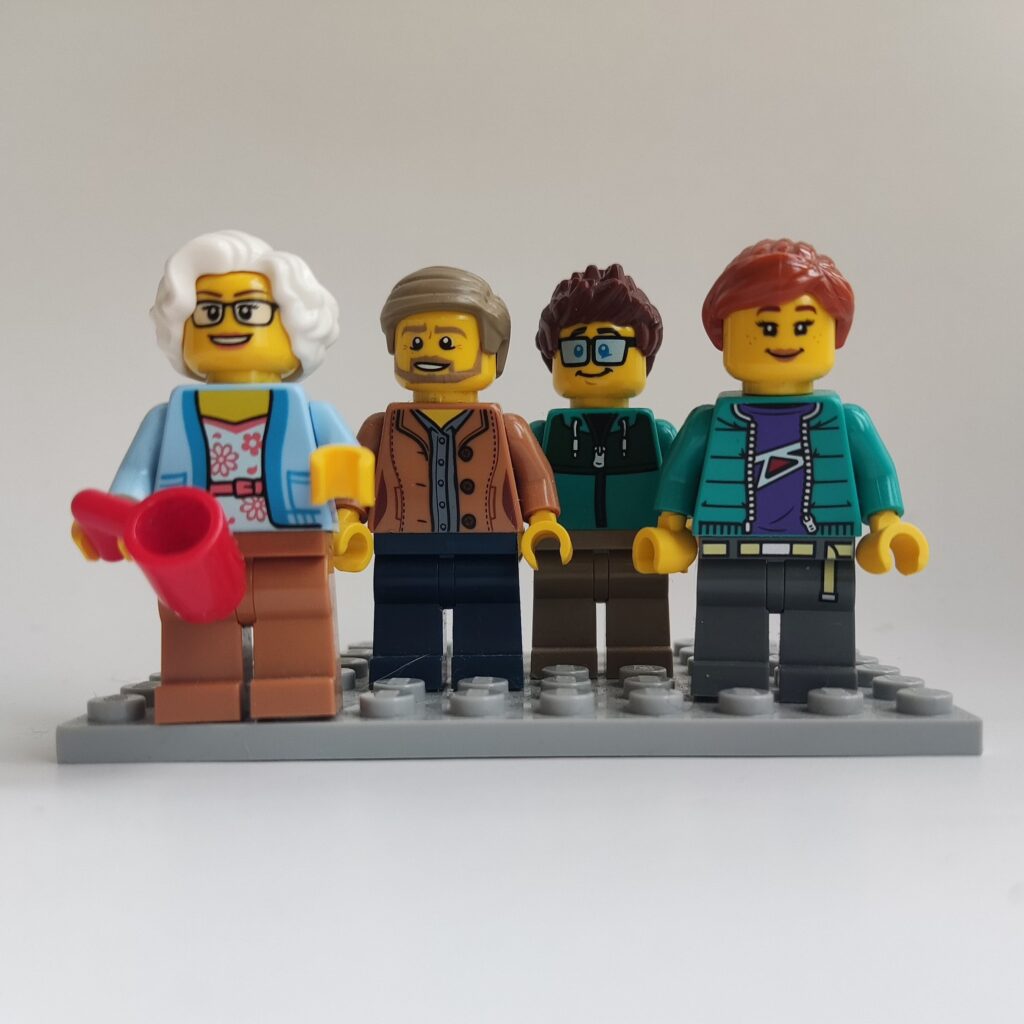
LEGO® is a trademark of The LEGO Group, which does not sponsor or endorse this project.
From persona to protagonist
We decided to use Kai, Susanne, Anita and Dave (if it is appropriate and makes sense) to also narrate the content during the actual implementation of the courses – as typical representatives of their field, they answer each other’s questions, help each other find solutions to typical challenges or talk about relevant use cases. This way, our community hopefully feels seen, understood and addressed. In addition, we have introduced a persona for our helpdesk (Hi Winnie!) who serves as our wild card and can answer all open questions as a ‘deus ex machina’.
Visual language
For the visualisation, we decided to emphasise the generic element of the personas with the help of brick toy figurines, which illustrate the materials of the different courses and offer a recognition effect. In the first step, we assembled the figures from my son’s box of building blocks and then rendered them in 3D using the free BrickLink Studio software. Thus, we were also able to customise the colours so that each minifigure was given its own main colour from our corporate design – this makes them easier to distinguish and helps with recognition.
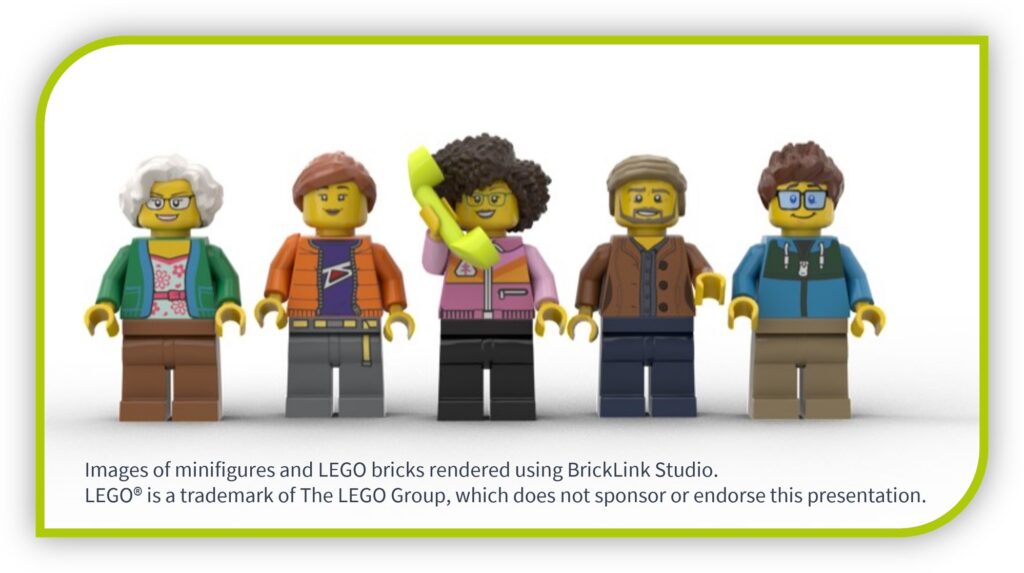
Lego® is a trademark of The LEGO Group, which does not sponsor or endorse this presentation.
Our personas serve as a guide and as identification figures. They can stand as abbreviations for a job description or a academic discipline, or they can drive a narrative forward as dialogue partners. And I hope they make our courses more relevant and interesting – and perhaps they also bring a little lightness to a context in which dry knowledge transfer with dense technical texts is the norm…
If you are reading this, you probably belong to our target group – what do you think?