

- This event has passed.
[Seminar Series] How to approach contested natural history holdings and their data? Case studies from Museum für Naturkunde Berlin
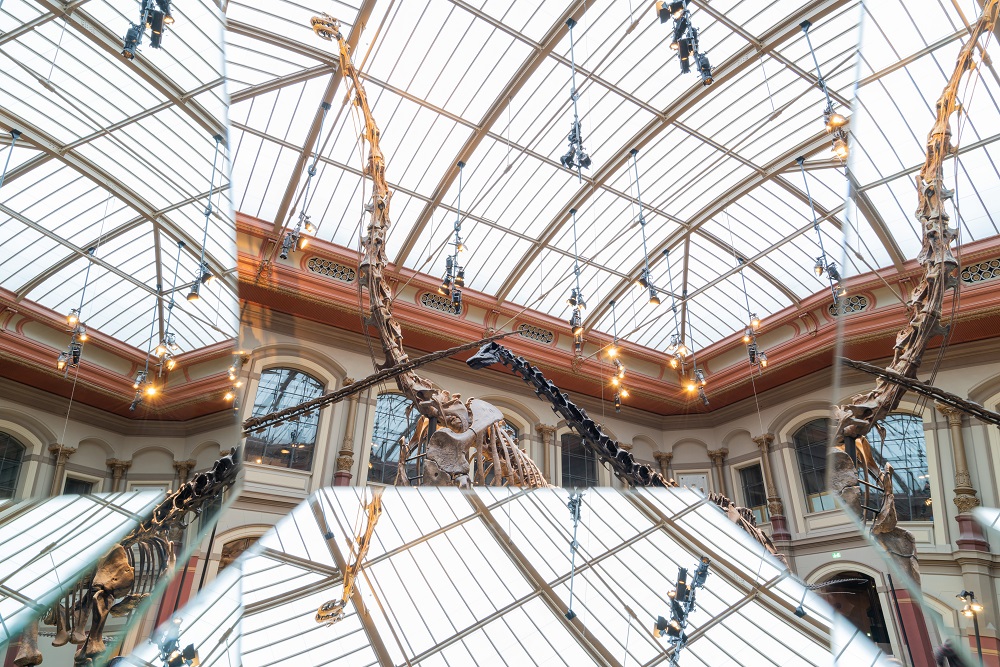
The Museum für Naturkunde Berlin (MfN) houses approximately 30 million objects, a significant proportion of which were acquired through expeditions conducted in colonized territories or submitted by colonial actors.
Against this historical backdrop, the question arises as to how the institution can engage responsibly and sensitively with this legacy. The seminar addresses this challenge through two case studies. First, we present a decision-tree model designed to support collection-based research by identifying objects with colonial context. Second, we introduce an ongoing project dedicated to the digitization of the Tendaguru fossils. In fact, one of the institution’s most iconic exhibits is the Giraffatitan brancai dinosaur fossil, which originates from excavations at Mount Tendaguru, carried out between 1909 and 1913 in what was then the German colony of German East Africa (present-day Tanzania). This enormous dinosaur specimen exemplifies the large-scale colonial collecting practices that shaped its holdings as the excavation was made possible through the labor of hundreds of African workers, resulted in the recovery and transport of approximately 200 tons of fossils to Berlin.
When dealing with data from such contested objects, the central question is: How can these contexts be presented on a metadata level? Which ethical and legal aspects need to be taken into account when dealing with colonial data? By bringing these questions together, the seminar aims to demonstrate that both critical reflection and careful digital curation of such collections constitute iterative processes that must be understood as research in their own right.
Speaker: Dr. Katja Kaiser (MfN), Dr. Ina Heumann (MfN), Dr. Sarah Wagner (FAU Competence Center for Research Data and Information)
Language: English
REGISTER HERE
Photo Credits: MfN, Eran Wolff