
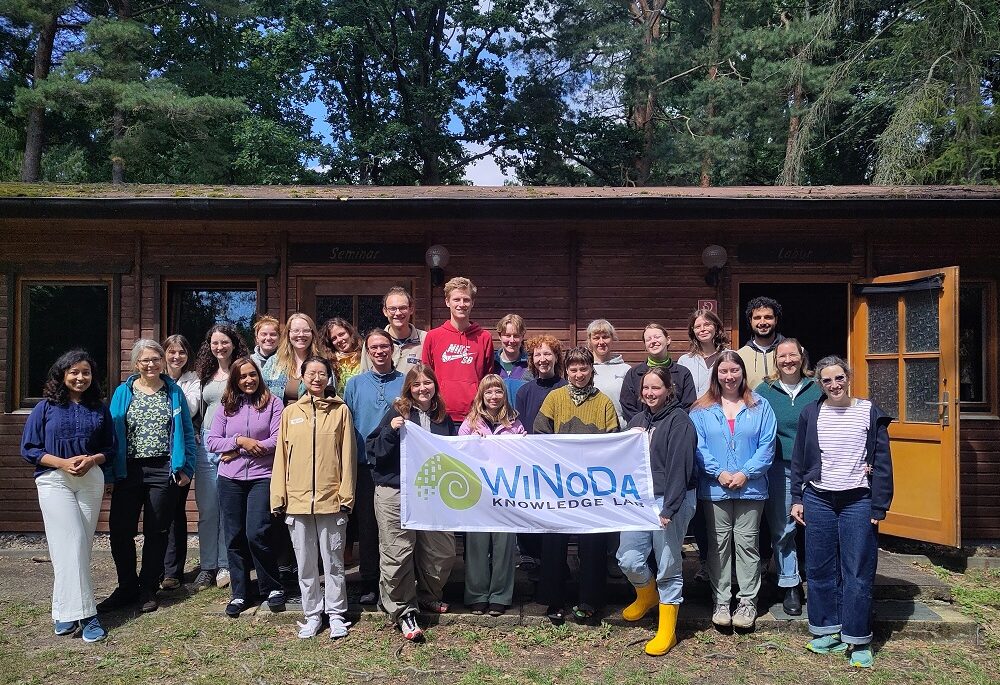
By the end of July, the time had finally come! After months of preparation, planning, coordination with the research team, invitations, acceptances and cancellations, we were finally ready to go – and we, Karolin, Nuria and Cora, set off from Berlin for the WiNoDa Summer School. Under the title “Ecology Field Training: Data Collection and Analysis at Lower Oder Valley”, we had planned a five-day workshop for 20 participants. Our destination was the Lower Oder Valley National Park, located about 100 km northeast of Berlin, directly along the German-Polish border on the Oder River. Our accommodation for the next few days was the Wildnisschule Teerofenbrücke, located right in the middle of the national park. For some participants, simply getting there was already an adventure – the nearest bus stop is a 2 km walk through the forest. As soon as everyone had arrived, we split up into groups of four and settled into the small wooden cabins.
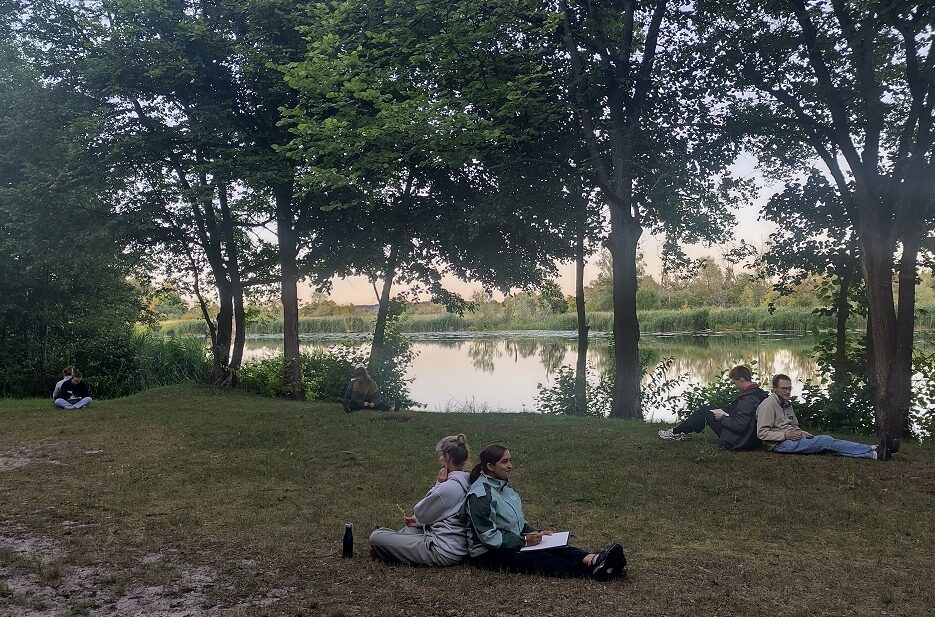
In the afternoon, following a welcome address by Karolin, Dr Jana Chmieleski from the National Park Authority gave an introduction to the National Park. She talked about the unique features of the national park, such as water and flood management, so that by the end everyone had a good overview of the special natural environment we would be exploring over the next few days. Afterwards, we introduced the participants to some of the methods we would be using in the following days through a few hands-on activities. In the evening, Cora gathered everyone in a meadow right on the banks of the Oder to wrap up the first day. We first shared our intentions and expectations in a sharing circle, giving us an opportunity to get to know each other better. Afterwards, participants worked in pairs on awareness exercises designed to encourage them to pay closer attention to the surrounding natural environment and foster a more holistic connection with the plants around them.
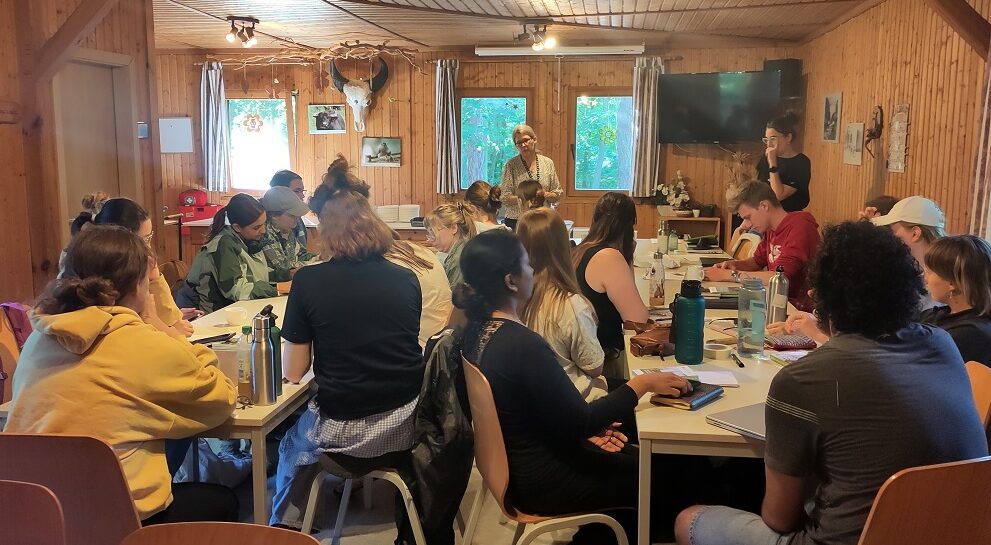
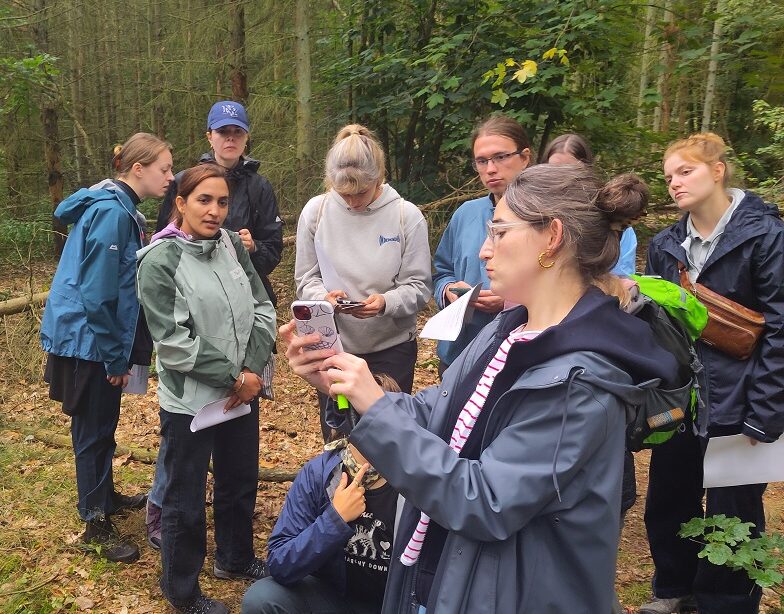
Day 2 began with preparations for the main objective of our Summer School: recording the habitats of various areas that had been studied for small mammals by a German-Polish research team in previous years. Nuria first gave the participants a theoretical introduction to working with QField. She had spent weeks developing an app in QField in consultation with the research team, tailored specifically to our use case. Once everyone had installed the app on their own phones, it was finally time to “head out into the field” to our first study area, located directly next to the Wildnisschule. In small groups, the participants tested all the methods and checked whether mobile data collection in QField was working properly or still needed some adjustments (yes, it did!).
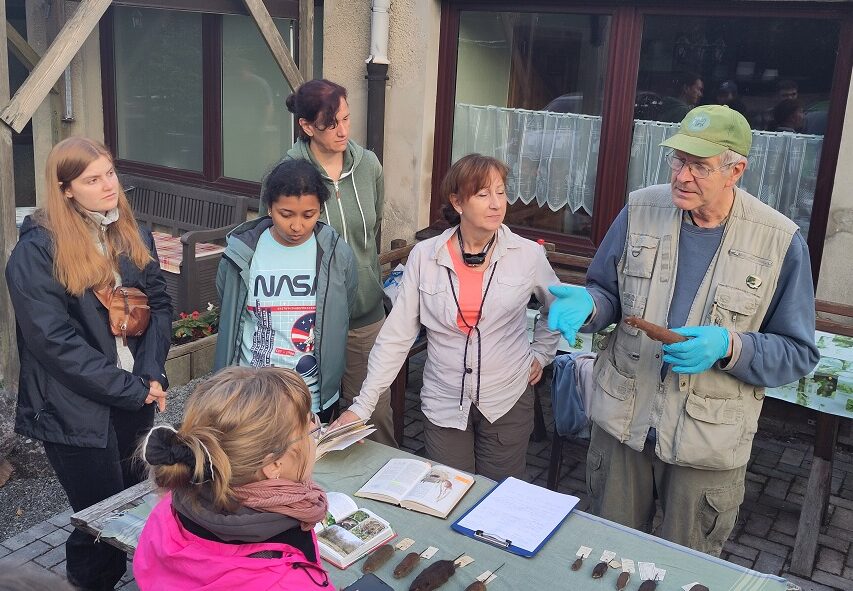
In the afternoon, the small-mammal research team visited us and explained how their fieldwork is conducted (focusing here on mice, voles and shrews) and what data they had collected over the past few years, and would also be collecting this year. If you would like to learn more about the project, feel free to watch this video, or find out more here. Since the animals are nocturnal, fieldwork only begins after dark: at 7 p.m., the live traps are opened and then have to be checked every two hours. That evening, the first half of the participants had the great opportunity to accompany the research team and experience first-hand how demanding small-mammal fieldwork is. We first met at the research team’s accommodation, about a 30-minute drive from our own, where we received a short introduction and learned to identify the different species using prepared specimens from the collection of the Museum für Naturkunde Berlin. We then split up and drove to the different study areas – one was located in a forest, while another was covered in reeds – to check the live traps for captured animals at 9 p.m. If an animal was found in a trap, it was carefully weighed, measured and marked before being released again. The entire examination, carried out by the experienced researchers, takes only a few moments in order to keep stress for the individual animals to an absolute minimum. On this first evening, no animals were actually caught during the first shift we accompanied. Nevertheless, the trip was an exciting and informative experience for everyone!
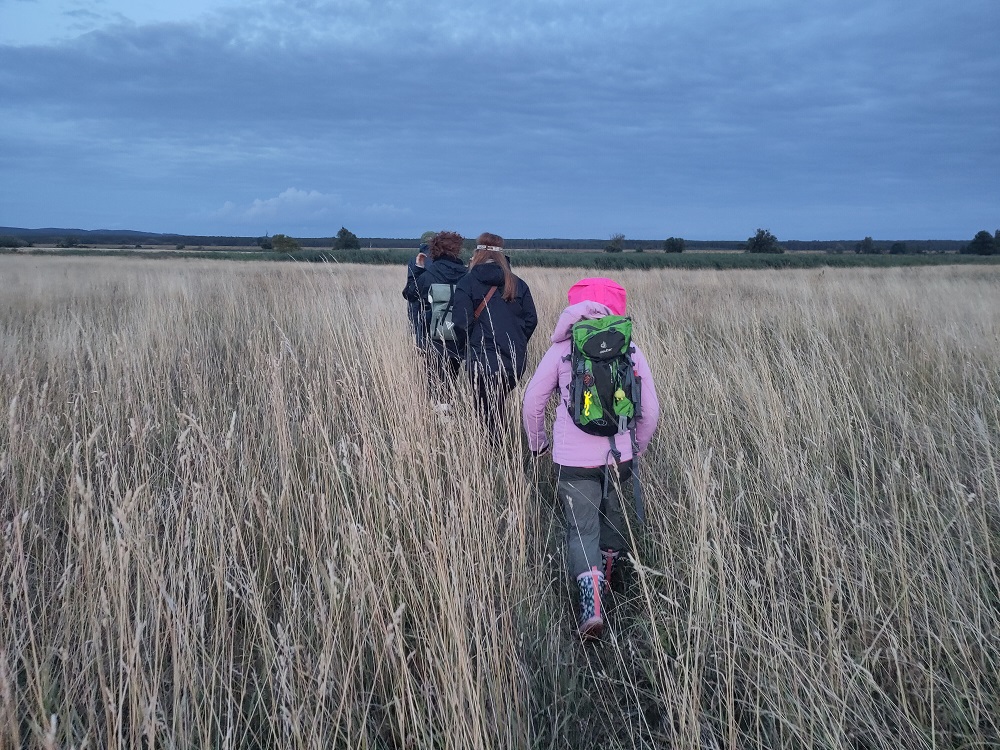
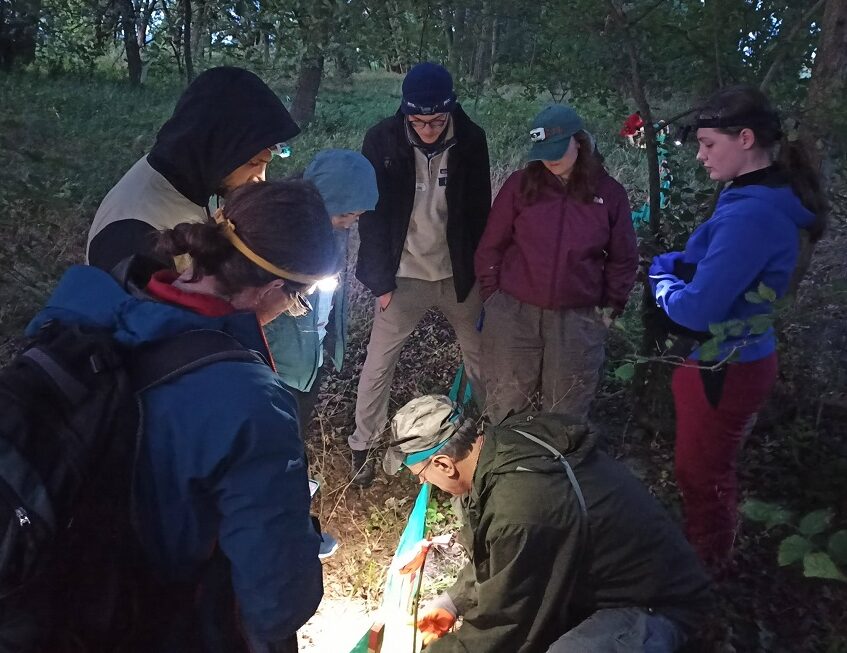
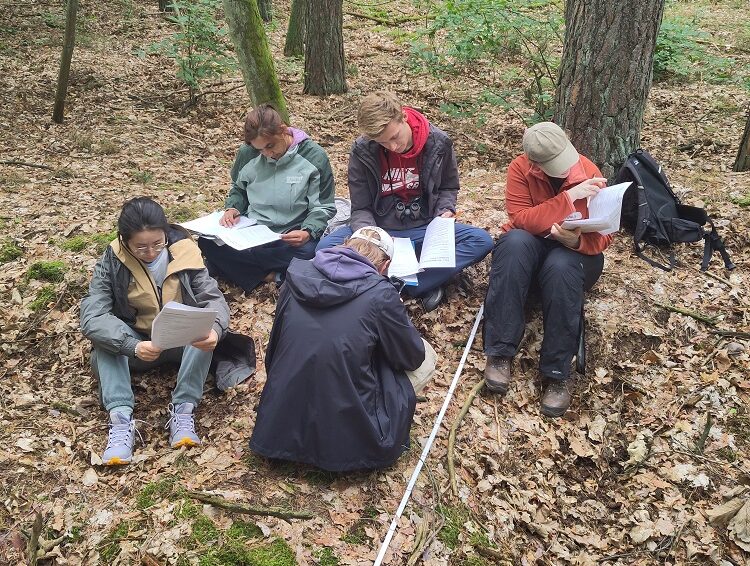
Day 3 brought the real highlight: the participants set off in groups of three to the different study areas – on foot, by bike or by car. Everyone was well prepared to investigate five different points within a designated study area and to record key characteristics of the area there – e.g. vegetation, tree circumference, dominant species. All of this information is important for researching and understanding which habitats small mammals prefer and how these habitats can best be protected and preserved. The participants encountered quite a few challenges along the way: some areas were ankle-deep in water, some were fenced off, while others were difficult to reach for various other reasons. Despite all the obstacles, the habitat surveys went well, and after a long day the participants returned to the wilderness school, exhausted but satisfied. In the evening, the second half of the group then headed out to join the research team and accompany their fieldwork.
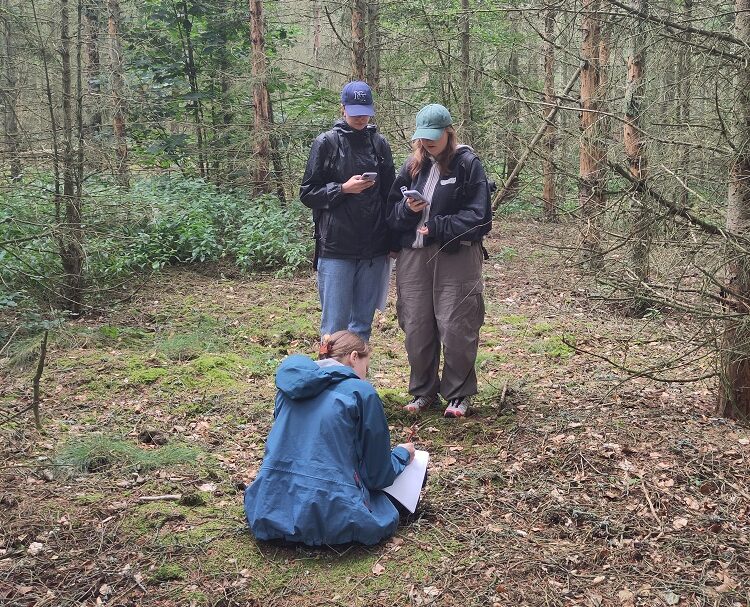
Day 4, the final day, was all about data transfer and storage. All the collected data had to be transferred to QGIS in order to secure it and make it available for further analysis. With such a large amount of data and so many people involved, this can be a very time-consuming process, but it is absolutely essential. Afterwards, our colleague Katja, who had travelled to the Summer School especially for this session, gave an introduction to the world of Public Engagement. The participants learned how important and valuable it can be to involve the public at different stages of the data life cycle. To conclude the official programme, the entire small-mammal research team joined us, and we exchanged observations and initial results. This led to some interesting discussions and conversations.
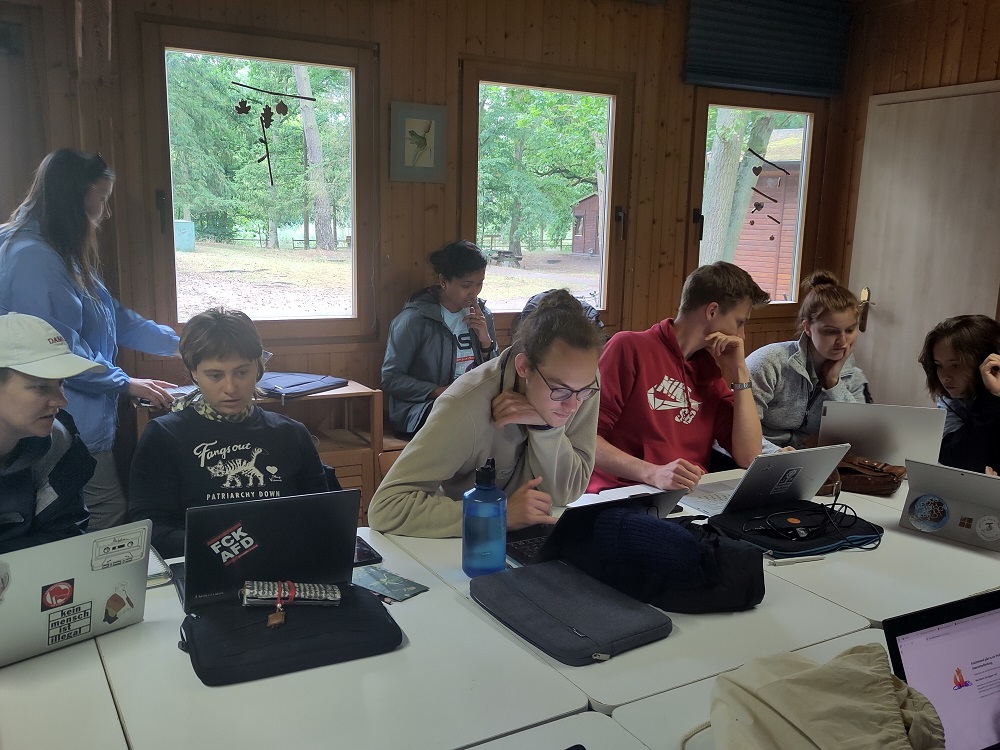
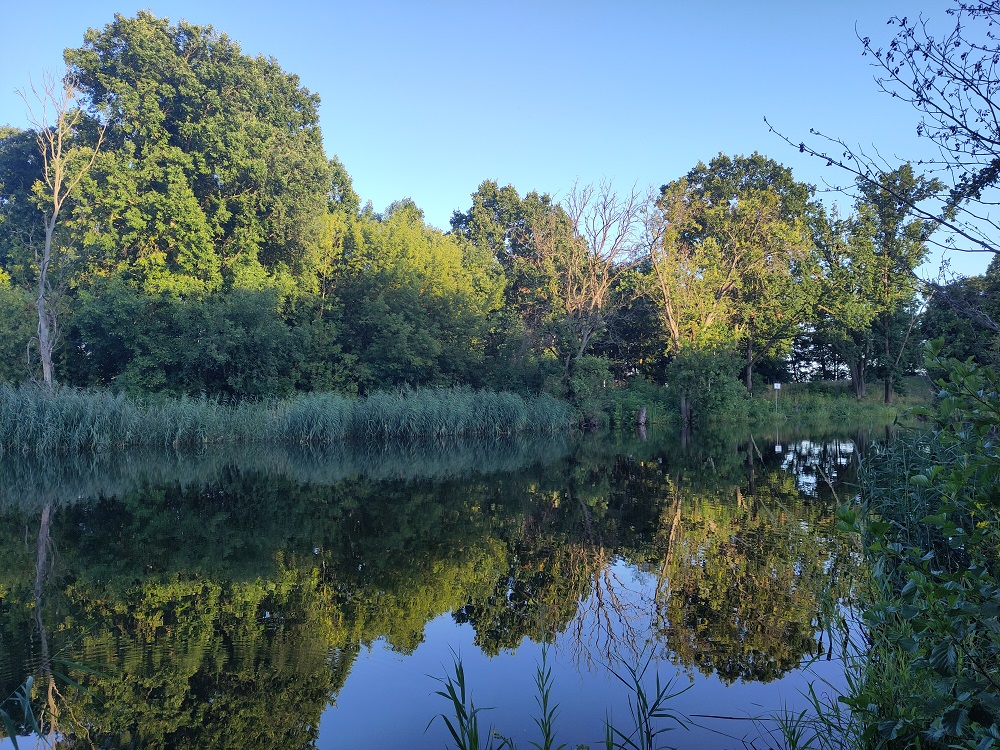
To round off this intensive time together, we gathered around the campfire on our final evening after a shared barbecue, exchanging experiences, telling stories and admiring the starry sky. The next morning, we came together one last time for a feedback session by the river – the consensus: It was a wonderful experience, and we learned a lot! We at WiNoDa couldn’t agree more 😊
Biologist and project coordinator at WiNoDa